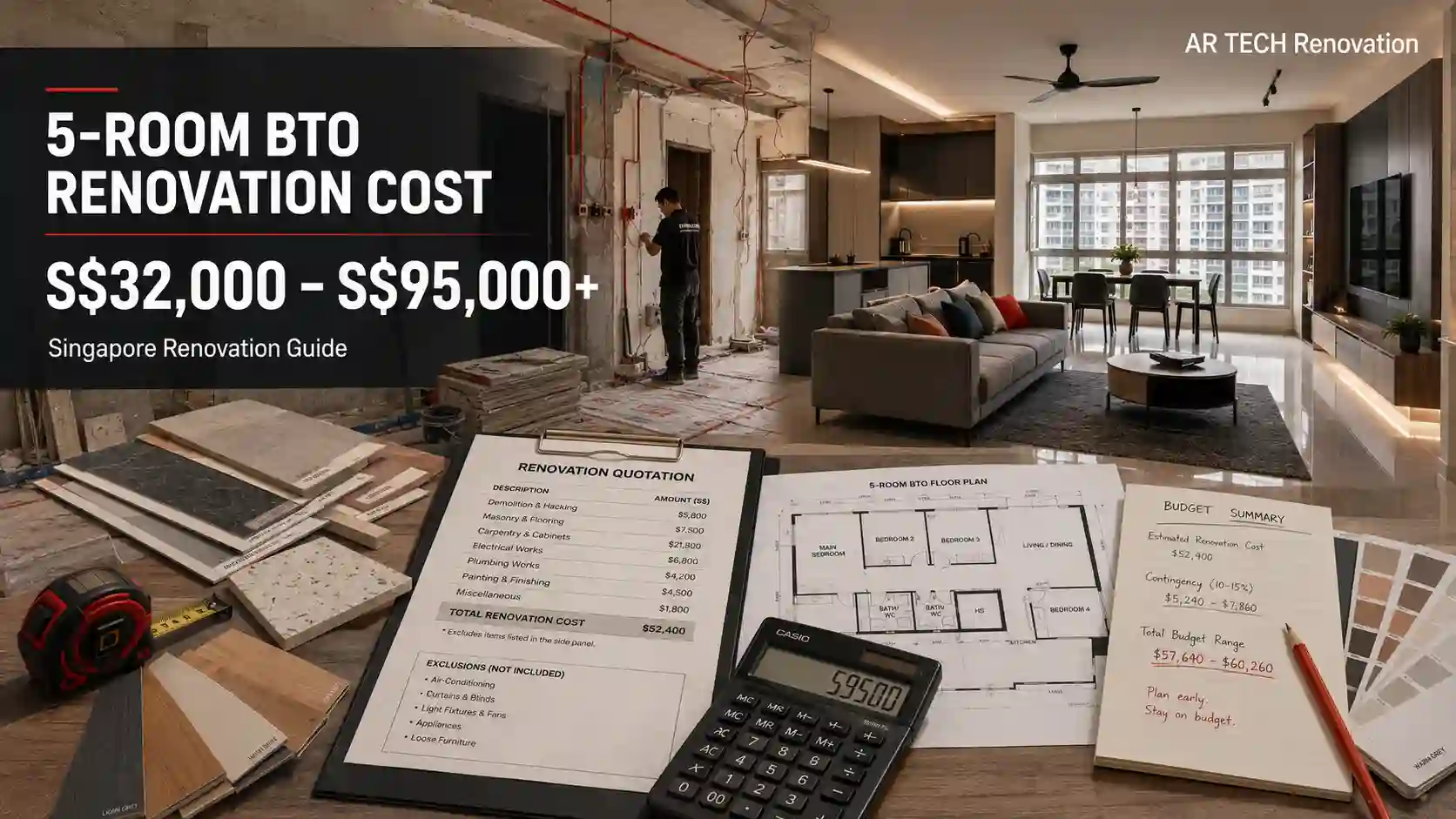

You are about to spend big money, and one missing step could cost you even more. Skipping key checks before renovation starts is the most common reason projects go over budget, run late, or end in disputes. Many homeowners in Singapore jump straight into design without sorting permits, scope, or contractor selection first. That single mistake turns a smooth renovation into a stressful one.
Customers struggle with knowing where to begin. There is so much information online. Some sources say start with design. Others say sort your budget first. After 10 years of renovating homes across Singapore – HDB flats, condos, and landed properties – the answer is clear. Preparation before Day 1 decides everything.
This guide gives you a full home renovation checklist to follow before any work starts. You will learn how to set your scope, build a realistic renovation budget, hire the right contractor, get permits sorted, and prepare your home properly. Follow these steps, and you avoid the most common renovation problems in Singapore.
Define Goals and Scope
Start by writing down exactly what you want the renovation to fix or change. This step stops you from wasting money on work you do not actually need. It also helps contractors give you accurate quotes.
Many homeowners mix up wants and needs early on. This creates confusion later. A clear scope keeps your project focused and your costs realistic.
List Needs vs. Wants
Needs are problems that must be fixed. Wants are upgrades that improve the space. List them separately before you meet any contractor.
Needs include things like leaking pipes, faulty wiring, or a broken toilet. Wants include a marble island, feature wall, or built-in wardrobe. Knowing the difference helps you cut costs if your budget gets tight. This problem happens when homeowners treat everything as urgent – costs balloon fast.
Start with a simple list. Write every issue in your home on one side. Write every upgrade you want on the other. Then rank them by priority. This list becomes the foundation of your scope of work.
Check Property Limits
Your property type controls what you can and cannot renovate. HDB flats, condos, and landed homes each follow different rules in Singapore.
HDB flat owners must follow HDB renovation guidelines. Certain walls cannot be hacked. Wet areas have tile restrictions. Condo owners must get MCST approval before work begins. Landed homeowners may need BCA approval for structural changes. Check your property type first. Do not assume any wall or floor can be changed freely.
Measure every room carefully. Include hallway widths, lift dimensions, and staircase turns. Bulky furniture or materials may not fit through tight access points. Finding this out early saves you time and money.
Draft a Clear Scope
A written scope of work tells your contractor exactly what to build, change, or fix. It protects both sides.
Include room-by-room details. List which walls get hacked, which floors get replaced, and which fixtures get changed. Specify any carpentry, electrical work, or plumbing changes. A vague scope leads to vague quotes. Vague quotes lead to disputes.
Your scope also helps you compare quotes fairly. When every contractor quotes the same scope, you compare apples to apples.
Budget and Finance
Set your total renovation budget before you speak to a single contractor. Knowing your limit stops you from getting swept up in expensive upgrades during design meetings.
Renovation costs in Singapore vary widely. They depend on property size, material choices, and scope. A realistic budget covers all cost categories – not just materials.
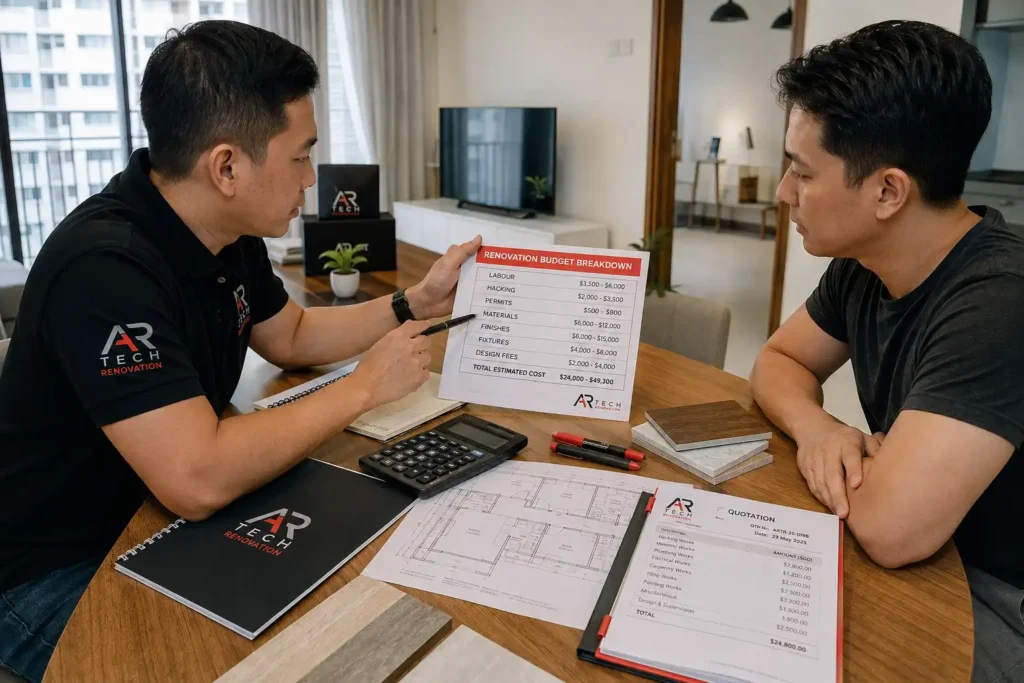
Set Cost Breakdowns
Break your budget into clear categories: labour, hacking, permits, design fees, materials, finishes, and fixtures. Leaving out any category causes shock later.
Customers struggle with lump-sum budgets. They set a total number but do not plan for each part. When carpentry costs more than expected, they have nothing left for flooring. Break every dollar down by trade. This gives you full control over where money goes.
Add a Contingency Fund
Keep 10% to 20% of your total budget as a contingency fund for unexpected costs. Do not touch this money unless something unexpected happens.
Hidden water damage, rotten timber, or old wiring discovered during hacking – these are real. They add costs that no one can predict. The contingency fund covers these without derailing the project. This is part of every solid renovation budget checklist.
Sort Your Financing
Arrange your renovation loan or financing before signing any contract. Banks and licensed money lenders in Singapore offer renovation loans. Know your limit before you commit.
Late financing causes project delays. Contractors may pause work if payment schedules are not met. Finalize your funding source early. Confirm your repayment plan fits your monthly budget.
Hire and Plan
Choosing the right contractor or interior designer is the most important decision you make. The wrong hire causes delays, poor work, and extra costs.
Take your time with this step. A cheaper quote is not always a better deal.
Compare Professionals
Get at least three itemized quotations before choosing anyone. Itemized means every line item is listed separately – labour, materials, permits, and design fees.
Check contractor registrations and licenses. Verify they carry insurance. Ask to see past projects. Contact previous clients if possible. Review case studies. A good contractor shows you their work. They welcome questions. They give clear answers.
Sign a contract that covers project scope, timeline, payment milestones, and what happens if there are delays. Never start work on a verbal agreement alone.
Confirm Permits
Confirm which permits your renovation needs before work starts. Starting without the right approvals can result in stop-work orders or fines.
HDB renovations require an HDB renovation permit for most works. Condo renovations need MCST approval. Structural work may require BCA permits. Your contractor should know what is needed. Ask them to confirm in writing. Do not assume permits are covered unless it is in the contract.
Finalizing Design and Logistics
Lock in every design decision before work starts. Changes made during construction cost more and cause delays.
Decisions made early are free. Decisions made mid-project are expensive.

Secure the Complete Floor Plan
Finalize your floor plan before any hacking begins. The floor plan controls everything – furniture placement, traffic flow, and room function.
Confirm every room layout. Check that the planned layout works with your lifestyle. A family with young children needs different layouts than a couple working from home. Walk through the plan mentally before approving it.
Lock In Your Technical Designs
Confirm all electrical socket locations, switch positions, and plumbing points before work starts. Moving these after hacking is costly.
Finalize carpentry drawings. Confirm cabinetry heights, depths, and finishes. Check wall changes and technical requirements. Review physical samples of paint, flooring, tiles, and countertops. Do not approve materials from photos alone. Samples show the real color and texture.
Measure Transit Bottlenecks
Check lift size, corridor width, and staircase turns before ordering large items. Many delivery problems happen because large pieces cannot enter the unit.
Measure your lift interior. Note the smallest corridor width. Check staircase turns if you are in a landed home. Share these dimensions with your contractor and suppliers. This simple step prevents delivery headaches.
Order Long Lead-Time Items
Order custom cabinets, specialty tiles, and imported appliances as early as possible. Some items take six to twelve weeks to arrive.
Customers struggle with delays caused by late orders. If custom carpentry is not ready, the entire project stalls. Identify every item with a long lead time. Order them right after finalizing designs. Do not wait until after hacking starts.
Regulatory Permits and Approvals
Get all permits sorted before any physical work begins. No permit means no legal right to work. This applies to HDB flats, condos, and landed properties in Singapore.
Skipping this step is one of the most costly renovation mistakes you can make.
Check Property-Specific Rules
HDB, condo, and landed properties each follow different renovation rules in Singapore. Check your specific rules before drafting your scope of work.
HDB renovation guidelines cover which walls can be hacked, how deep floor tiles can be laid, and what wet area changes are allowed. Condo MCST rules vary by development. Some condos restrict working hours more strictly than HDB rules. Landed properties follow BCA structural guidelines. Your contractor must know all relevant rules before work starts.
Apply for Structural Permits
Apply for structural permits through the right channel before hacking any wall. Structural changes without a permit are illegal and can be forced to be undone.
HDB owners apply through the HDB e-Service portal. Condo owners submit to MCST. Structural changes in landed homes may require a Qualified Person (QP) and BCA submission. Your contractor should guide you through this. Confirm they have done this process before.
Note Restricted Working Hours
Renovation work in Singapore has approved working hours. Working outside these hours creates noise complaints and legal issues.
HDB approved renovation hours are generally weekdays 9am to 5pm and Saturdays 9am to 1pm. Noisy work like hacking is further restricted. Condos may have stricter timings set by MCST. Your contractor must plan the work schedule around these rules. Confirm approved hours in writing before work starts.
Hire Licensed Professionals Only
Only hire licensed renovation contractors and registered tradespeople. Unlicensed workers create legal risk and insurance problems.
Electrical work must be done by a licensed electrician registered with the Energy Market Authority (EMA). Plumbing work must follow PUB requirements. Structural work must involve a licensed contractor. Your main contractor should coordinate all licensed trades. Check their credentials before signing.
Create a Realistic Renovation Schedule
A realistic renovation schedule maps out every phase of work from start to finish. It tells you when each trade starts, how long each phase takes, and when you can move back in.
Build the schedule with your contractor after finalizing scope, permits, and material orders. A schedule built without knowing lead times or permit approval periods is guesswork.

Sequence matters. Hacking comes before electrical and plumbing rough-in. Rough-in comes before plastering. Plastering comes before painting. Carpentry and fixtures come last. Any trade working out of sequence causes rework and delays.
Add buffer days for inspections, deliveries, and unexpected issues. A well-planned home renovation timeline includes buffer time. Do not plan for a perfect scenario. Plan for a realistic one. If your contractor says the project takes eight weeks with no delays, ask what happens if there are delays. Confirm the revised timeline in your contract.
Site Preparation
Prepare your home before the contractor arrives on Day 1. A well-prepared site lets work begin immediately without wasted time.
Poor site preparation causes delays on the first day. It also increases the risk of damage to your belongings.
Clear Out Personal Belongings
Remove all furniture, electronics, and personal items from work areas before hacking starts. Items left behind get dusty, scratched, or broken.
Hacking creates fine dust that travels far. Electronics are especially vulnerable. Store valuables and sensitive documents offsite or in a locked room. Arrange offsite storage if needed. The cost of storage is far less than replacing damaged items.
Take timestamped photos of your entire property before renovation starts. These photos protect you if disputes arise about pre-existing damage.
Inform Your Immediate Neighbors
Tell your immediate neighbors about your renovation schedule before work starts. This is respectful and often required under condo MCST rules.
Neighbors living below, above, and beside your unit are most affected. Give them the start date, expected end date, and which days involve noisy work. This reduces complaints and keeps the relationship good. In HDB blocks, some town councils require a notice to be posted at the unit door.
Set Up Secure Key Access
Arrange a safe and clear key access plan for your contractor. Your contractor needs daily access to the site. You may not always be there.
Agree on how keys are managed. Some homeowners use a lockbox. Others hand keys directly to the main contractor. Confirm who holds keys, who can enter, and what happens after the project ends. Put this in writing.
Frequently Asked Questions
What Should I Consider Before Starting a Renovation?
Consider your scope, budget, permits, contractor, and timeline before starting any renovation. These five areas control whether your project runs smoothly or runs into trouble. Start by listing what needs to change and why. Set a realistic budget with a contingency fund. Check which permits apply to your property. Shortlist licensed contractors and get itemized quotes. Build a timeline that accounts for permit approval, material lead times, and construction phases. Sorting these before Day 1 prevents most common renovation problems.
What Comes First When Renovating a House?
Define your scope of work first. Before hiring anyone or spending any money, write down exactly what the renovation needs to fix or improve. Once your scope is clear, set your budget. Then hire a contractor who can deliver your scope within that budget. Get permits sorted. Finalize designs. Order long lead-time items. Only then should physical work begin. This order protects your money and keeps your project on track.
What Are the Steps in a Full House Renovation?
A full house renovation follows this sequence: scope → budget → contractor → design → permits → site prep → construction → inspection → handover.
Each step builds on the one before it. Skipping steps or doing them out of order creates problems that are expensive to fix. Most renovation disputes in Singapore happen because homeowners skipped the planning phase and jumped straight to design or construction.
What Is the Timeline for Renovations in Singapore?
Renovation timelines in Singapore typically range from six weeks for minor works to six months or more for full gut renovations. The actual timeline depends on scope, permit approval time, and material lead times. HDB permit approval can take a few days to a few weeks. Custom carpentry and imported materials often take six to twelve weeks. Construction itself depends on what trades are involved. Add buffer time for inspections and touch-ups. A realistic renovation timeline always includes these factors.
How Can I Keep Renovation Costs Under Control?
Keep renovation costs under control by locking in your scope before signing any contract. Changes made during construction are the biggest source of cost overruns. Set a firm budget with a 10% to 20% contingency fund. Get itemized quotes from at least three contractors. Compare them line by line. Order materials and finishes early to avoid price increases. Avoid scope changes once work begins. If changes are needed, agree on the cost in writing before proceeding.
What Rooms Should You Renovate First?
Renovate rooms that affect structural work or utility rough-ins first. Kitchen and bathroom renovations involve plumbing and electrical work that must be done before walls are closed up. In a full renovation, work generally flows from hacking → rough-in trades → plastering → flooring → painting → carpentry → fixtures. If you are doing a partial renovation, start with the rooms that cause the most daily disruption. Getting those done first lets the household function normally while remaining rooms are completed.
What Are Common Unexpected Issues in a Renovation?
Hidden water damage, outdated wiring, and concealed mould are the most common unexpected issues found during renovation in Singapore. These only appear after hacking starts. Old plumbing that looks fine from outside may be corroded inside. Wiring in older HDB flats sometimes does not meet current standards. Mould behind wet area tiles is common in Singapore’s humid climate. A 10% to 20% contingency fund covers these discoveries without stopping your project.
What Are the Most Common Renovation Mistakes to Avoid?
The most common renovation mistakes are skipping permits, hiring unlicensed contractors, and making design changes mid-project. Each one adds cost and stress. Other common mistakes include setting budgets without contingency funds, ordering materials too late, and signing vague contracts. Rushing the planning phase is the root cause of most renovation problems. Every hour spent planning properly saves many hours fixing problems later.
What Are the Most Common Renovation Regrets?
The most common renovation regrets in Singapore involve insufficient power points, poor storage planning, and choosing cheap materials that wear out fast. These are decisions made quickly during design that homeowners live with for years. Customers struggle with storage. Many wish they had built more storage into the carpentry design. Others regret choosing trendy finishes over durable ones. Taking time during the design phase to think about daily use – not just how things look – prevents most regrets.
What Adds the Most Value to a Home Renovation?
Kitchen and bathroom renovations typically add the most value to a home in Singapore. These are the rooms buyers and tenants notice most. Good quality flooring throughout the home also adds clear value. Fresh paint, modern lighting, and well-fitted carpentry improve how a space feels. Adding electrical points, USB charging sockets, and good lighting to a home office adds practical value. Focus on upgrades that improve daily function. Those tend to hold value better than purely decorative changes.
Conclusion
A solid home renovation checklist saves you time, money, and stress. Start by defining your scope clearly. Set a realistic budget with a contingency fund. Choose a licensed contractor with a proper contract. Get permits sorted before any work begins. Lock in designs and order materials early. Prepare your site properly before Day 1. These steps are not optional – they are what separates a smooth renovation from a painful one.
Singapore Home Renovation Services has guided homeowners through every stage of this process for over 10 years. We understand HDB guidelines, condo MCST rules, permit requirements, and the real challenges that come with renovating in Singapore. Our team helps clients build clear scopes, realistic budgets, and practical timelines before a single wall is touched. We bring that experience to every project.
If you are planning a renovation in Singapore and want to start right, we are here to help. We offer honest advice, itemized quotations, and a clear process from planning to handover. Reach out to us today. Let us help you turn your renovation plan into a home you love.