
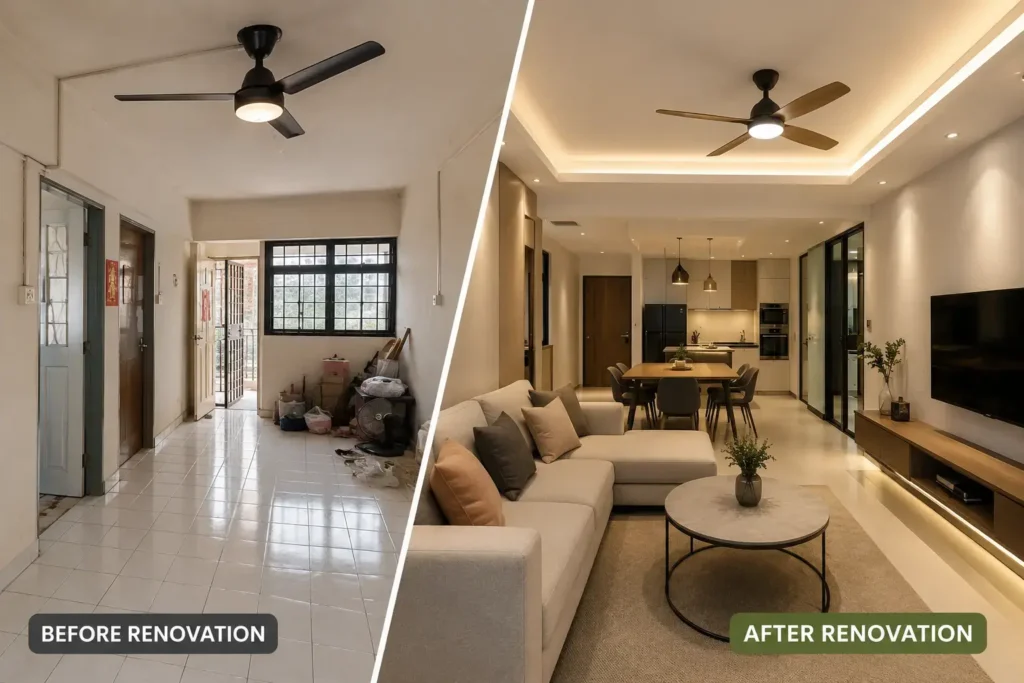
Your home renovation in Singapore does not have to be stressful, costly, or confusing. Many homeowners feel lost before they even start. They do not know how much to budget. They do not know how long it will take. They pick the wrong contractor and regret it later.
Customers struggle with information that is scattered and hard to trust. You might find one article talking about HDB rules and another one quoting prices that seem outdated. That gap creates real problems. As a renovation contractor with over 10 years of experience in Singapore, I have seen these exact situations again and again.
In this guide, you will learn everything about home renovation in Singapore. We cover costs by property type, renovation timelines, how to choose a contractor, common mistakes, and rules you must follow. By the end, you will feel ready and confident to start your renovation project.
Understanding Home Renovation Fundamentals
Home renovation means improving an existing home without changing its core structure. It covers everything from painting walls to full-unit overhauls. In Singapore, this applies to HDB flats, condominiums, and landed houses.
The scope of a renovation can be small or large. Some homeowners just want to refresh the look. Others need to fix broken systems and update old layouts. The type of work you choose depends on your home’s condition, your lifestyle, and your budget.
Every renovation project starts with understanding what the space needs. A 20-year-old resale HDB has different needs than a brand-new BTO. Getting this right at the start saves time, money, and stress later.
Types of Home Renovation Projects
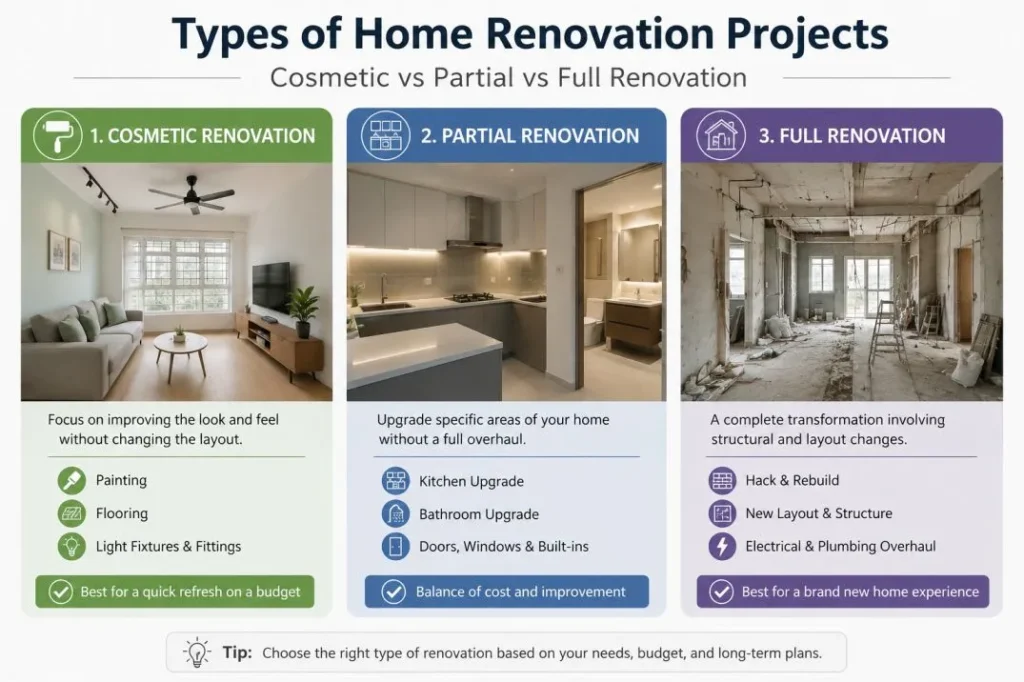
Home renovation projects fall into three main types: cosmetic, partial, and full renovation. Each serves a different purpose and comes with a different cost level. Knowing the difference helps you plan smarter.
Cosmetic renovations focus on looks. This includes painting, flooring, and fixture changes. Partial renovations tackle specific rooms or systems. Full renovations rebuild or upgrade the entire home from top to bottom.
Renovation vs. Remodeling: What’s the Difference?
Renovation restores or upgrades what already exists. Remodeling changes the structure or layout of a space. In Singapore, most residential work falls under renovation. Full structural changes require special permits and are tightly regulated, especially in HDB flats.
Customers often confuse these two terms. A kitchen renovation might mean new cabinets and tiles. Remodeling might mean removing a wall to merge the kitchen and dining room. One is simpler. The other involves permits, engineers, and HDB or condo approval.
Planning Your Home Renovation Project
Good renovation planning prevents budget shocks and timeline surprises. Planning is not just making a mood board. It means setting a real budget, understanding lead times, and making firm decisions before work begins.
This problem happens when homeowners skip proper planning. They start work, then change their minds midway. Scope changes during construction cause delays and cost overruns. Contractors have to redo completed work. Everyone loses time and money.
Setting Renovation Goals and Priorities
Start by listing what bothers you most about your home. Write down problems first, then wants. Problems include leaking pipes, old wiring, or damaged floors. Wants include a new look, more storage, or an open-plan layout.
Rank your list. Fix problems first. Then add upgrades based on your remaining budget. This approach keeps your renovation budget realistic and focused.
Creating a Realistic Renovation Plan
A realistic renovation plan connects your goals to your actual budget. Do not plan for marble floors if your budget is $30,000 for a 4-room HDB. Your plan must match what the money can actually do.
Get at least three quotations before deciding. Compare what each contractor includes. Check material grades, warranty terms, and payment schedules. A detailed plan also protects you if disputes arise during the work.
Choosing the Right Renovation for Your Home
The right renovation type depends on your home’s condition and your goals. A new BTO flat may only need cosmetic work. A 30-year-old resale flat may need full structural attention. Matching scope to need prevents overspending and underdelivering.
Cosmetic Renovation
Cosmetic renovation focuses on surface-level changes. This includes repainting walls, replacing light fixtures, changing flooring, and updating furniture. It is the most affordable type of renovation. Costs typically range from $15,000 to $30,000 for a standard HDB flat.
This type suits new BTOs, recently renovated homes, or budget-conscious homeowners. The work is fast. Most cosmetic renovations finish within four to six weeks.
Partial Home Renovation
Partial renovation upgrades specific rooms or systems. You might renovate only the kitchen and bathrooms while leaving bedrooms untouched. This approach costs less than a full renovation and causes less disruption.
Customers choose partial renovation when certain areas are in good condition. It is also a smart option if you plan to renovate in phases. You can prioritize high-use areas now and upgrade bedrooms later.
Full Home Renovation
Full home renovation covers the entire unit from start to finish. This includes hacking old tiles, replacing all electrical and plumbing systems, installing new carpentry, and finishing every room. It suits resale flats, older condominiums, and landed houses with outdated interiors.
Full house renovation costs more and takes longer. Expect three to five months for a complete overhaul. However, it gives you total control over the final result. Everything is new, consistent, and built to your taste.
Home Renovation by Property Type
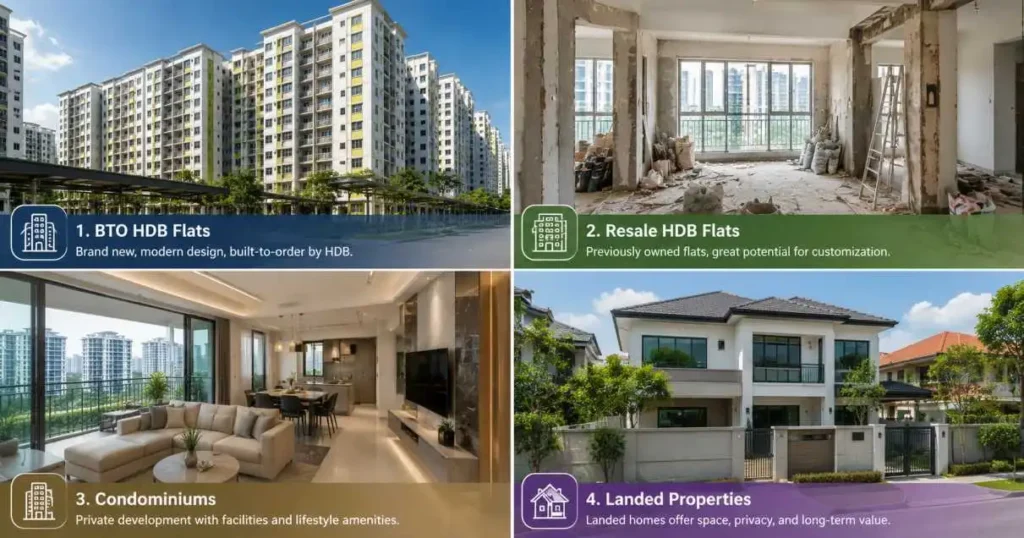
Different property types in Singapore have different renovation needs, rules, and costs. HDB flats follow HDB regulations. Condominiums follow Management Corporation Strata Title (MCST) rules. Landed houses have fewer restrictions but more complex structural work.
BTO Renovation
BTO renovation involves a fresh unit with minimal prior work needed. The walls are bare, the floors are unfinished, and the systems are new. This gives you flexibility in design. Most BTO owners do a mid-range renovation that costs between $40,000 and $70,000.
The good news is that BTO units have fewer hidden problems. The bad news is that lead times for materials and carpentry are long. Contractors are in high demand during BTO collection periods. Book your contractor early.
Resale HDB Renovation
Resale HDB renovation is more complex than BTO renovation. The unit has existing finishes, old pipes, and possibly outdated wiring. You need to assess what to keep and what to replace. Hacking costs are higher because more material needs removal.
Customers who buy resale flats often underestimate the hidden work. Old pipe joints may need replacement. Waterproofing in bathrooms may have failed. These issues only become visible after hacking begins. Budget a contingency of at least 10% to 15% for surprises.
Condominium Renovation
Condo renovation follows MCST rules and management office guidelines. You need to submit renovation plans for approval before work begins. Working hours are stricter. Noise restrictions are enforced. Waste disposal must follow the building’s procedures.
Condo units vary widely. Some are 10 years old. Others are brand new. The renovation scope depends on the unit’s condition and what the MCST permits. Always check the house rules before finalizing your renovation plan.
Landed House Renovation
Landed house renovation offers the most design freedom. There are no MCST restrictions. You can alter layouts, add extensions, or rebuild sections. However, any structural work still needs approval from the Building and Construction Authority (BCA) and qualified engineers.
These projects are the most expensive and complex. Costs can range from $80,000 to well above $200,000 depending on the house size and scope. The timeline is also longer. Expect four to eight months for a full landed house renovation in Singapore.
Estimated Costs by Property Type
Renovation cost in Singapore depends heavily on property type, size, and scope. The numbers below reflect mid-range renovation packages. Luxury finishes and full structural changes will cost more.
3-Room HDB
A 3-room HDB renovation typically costs between $30,000 and $50,000. This covers basic carpentry, tiling, painting, and essential fittings. The unit size is around 60 to 73 square meters. Full renovations at the higher end include custom cabinetry and feature walls.
4-Room HDB
A 4-room HDB renovation usually costs between $45,000 and $70,000. This is the most common renovation type in Singapore. The unit ranges from 90 to 105 square meters. Mid-range packages cover full carpentry, flooring, bathroom, and kitchen upgrades.
5-Room HDB
A 5-room HDB renovation costs between $60,000 and $90,000 on average. The larger space means more materials and more labor hours. A five-room flat ranges from 110 to 130 square meters. High-end finishes and full rebuilds can push costs above $100,000.
Condominium Units
Condo renovation costs vary based on unit size and age. A standard two-bedroom condo costs between $50,000 and $80,000 to renovate. Larger three-bedroom or four-bedroom units range from $80,000 to $150,000. Older units with dated layouts require more hacking and higher material costs.
Key Cost Drivers & Budget Breakdown
The biggest cost drivers in any renovation are carpentry, tiling, and plumbing. Understanding each one helps you prioritize and control your spending. Every dollar saved in one area can go toward something that matters more to you.
Carpentry & Cabinetry
Carpentry is usually the largest single cost in a home renovation. Custom-built wardrobes, kitchen cabinets, TV consoles, and storage units add up fast. Carpentry for a 4-room HDB can cost between $15,000 and $30,000 alone.
The grade of materials matters. Moisture-resistant board costs more but lasts longer, especially in kitchens and bathrooms. Soft-close hinges and quality drawer systems also add to the price. Choose durable materials over cheap options. You will not regret it.
Masonry & Tiling
Masonry and tiling costs depend on tile grade, size, and quantity. Labor is charged per square foot. Large-format tiles cost more to lay because they need more precision. Bathroom and kitchen tiling together can cost $5,000 to $12,000 for a standard HDB.
Hacking old tiles before laying new ones adds to the cost. Some homeowners choose to overlay tiles to save money. This works only if the existing tiles are in good condition and the height difference is acceptable.
Electrical & Plumbing
Electrical and plumbing work are not areas to cut corners. Old wiring in resale flats must meet current safety standards. Full rewiring of a 4-room HDB costs between $3,000 and $6,000. Plumbing replacement for bathrooms and kitchen can cost $3,000 to $8,000.
These systems are hidden inside walls and floors. Poor workmanship creates problems that are expensive to fix later. Always use licensed electricians and plumbers for these jobs.
Hacking & Demolition
Hacking costs depend on how much existing material needs removal. Removing tiles, knocking down non-structural walls, and clearing old carpentry all cost money. Hacking for a full resale HDB renovation can range from $3,000 to $8,000.
Debris disposal adds to this cost. Contractors must follow HDB and local council rules for waste removal. Make sure your quotation includes proper disposal fees. Some contractors quote low and charge disposal separately.
Contingency Buffer
Always set aside 10% to 15% of your total budget as a contingency. Hidden problems are common in older properties. Once hacking begins, you may find rotted wood, failed waterproofing, or outdated pipes that need immediate replacement. Having a buffer prevents panic and project delays.
Standard Renovation Timeline
A typical home renovation in Singapore takes 12 to 16 weeks from start to finish. This depends on the property type, scope of work, and contractor availability. Complex projects or major structural changes can take longer.
Weeks 1–2
The first two weeks cover consultation, design, and quotation approval. You meet with your contractor, finalize the design, and sign the contract. Material orders are placed during this period. Some materials like custom carpentry have lead times of four to six weeks.
Weeks 3–6
Hacking, masonry, and electrical work happen in weeks three to six. Old tiles are removed. New tiling begins. Electricians run new wiring. Plumbers replace or reroute pipes. This is the noisiest and most disruptive phase of any renovation.
Weeks 7–11
Carpentry installation and ceiling works happen during weeks seven to eleven. Cabinets, wardrobes, and built-in furniture are fitted. False ceilings are installed if included. Painting begins once carpentry is complete.
Weeks 12–14
Finishing works and fixture installation happen in weeks twelve to fourteen. Light fittings, switches, sanitary fittings, and kitchen appliances are installed. Flooring is completed. Touch-up painting is done.
Weeks 15–16
The final two weeks cover inspection, snagging, and handover. You walk through the unit with your contractor. You check every item against the agreed scope. Defects are fixed. A final cleaning is done before you move in.
The Home Renovation Process
Understanding the renovation process helps you stay in control at every stage. Each phase connects to the next. A delay in one phase pushes everything back. Knowing what to expect reduces stress and helps you respond quickly when issues arise.
Initial Consultation
The initial consultation is where you share your needs, budget, and timeline. A good contractor listens first and advises second. They assess the unit, note existing conditions, and flag potential problem areas. This meeting sets the foundation for everything that follows.
Design and Space Planning
Design and space planning turn your needs into a workable layout. Your contractor or interior designer creates floor plans and mood boards. You review and adjust until the plan fits your lifestyle. Do not rush this stage. Mistakes in design are expensive to fix during construction.
Material Selection
Material selection affects both the look and durability of your renovation. You choose tiles, paint colors, flooring types, cabinet finishes, and fixture styles. Your contractor should guide you on what works well in Singapore’s humidity and temperature conditions.
Construction and Installation
Construction begins once materials are ordered and permits are in place. Work follows a strict sequence: hacking, masonry, electrical, plumbing, carpentry, painting, and finishing. Rushing any phase causes quality problems. A good contractor follows this order without skipping steps.
Final Inspection and Handover
The final inspection is your chance to check every detail before handover. Walk through each room with a checklist. Check all cabinet doors, drawers, switches, lights, and fittings. Note any defects in writing. A reputable contractor fixes all snag items before the project is closed.
Rules, Permits, and Regulations
Renovation in Singapore is regulated, and breaking rules can result in fines or forced reinstatement. Rules differ depending on your property type. Knowing them before you start prevents costly mistakes.
HDB Flats
HDB renovation must follow the Housing and Development Board’s approved guidelines. You need to submit a renovation permit through the contractor before work begins. HDB approves the permit, usually within three to five working days. Prohibited works include hacking structural walls and removing floor screeds beyond the permitted depth.
New BTOs
New BTO flats have specific restrictions during the first five years. HDB prohibits certain hacking works to protect the building’s integrity during the initial warranty period. Always check the current HDB renovation guidelines before finalizing your BTO renovation plan.
Private Condos
Condo renovation requires approval from the MCST management office. You must submit renovation plans, contractor details, and insurance documents. Work hours are restricted to weekdays, typically 9am to 5pm. Some condominiums also have specific rules on materials and contractor access.
Regulatory Rules & Restrictions
Following renovation rules is not optional in Singapore. Violations can result in fines, stop-work orders, or reinstatement costs. These rules exist to protect building safety and the well-being of neighboring residents.
Structural Walls
You cannot hack or alter structural walls without BCA approval. Structural walls carry the load of the building. Removing them without engineering support can cause serious damage. HDB flats have strict rules about which walls can be touched. Your contractor must know these boundaries.
Bathroom Waterproofing
Bathroom waterproofing is required by HDB and BCA regulations. When you hack bathroom tiles, the waterproofing layer must be fully replaced. Skipping this step causes water seepage into the unit below. The repair cost and legal liability are significant. Always insist on proper waterproofing.
Permitted Working Hours
Renovation work in HDB flats is allowed only from 9am to 5pm on weekdays. No noisy work is allowed on Sundays and public holidays. Weekday evenings are also restricted for high-noise activities. Violating these hours can result in complaints, fines, and project delays.
Specialist Contractors
Certain renovation works require licensed specialist contractors. Electrical work must be done by EMA-licensed electricians. Plumbing must be done by PUB-licensed plumbers. Gas piping requires SP Services-certified contractors. Always verify that your contractor uses the right licensed specialists for each trade.
Hiring the Right Professionals
The renovation professional you need depends on your project type and budget.
| Professional Type | What They Do | Best For |
| Interior Designer | Creates overall design concept and manages aesthetics | Homeowners who want a coordinated design vision |
| Renovation Contractor | Handles construction, installation, and project management | Most renovation projects in Singapore |
| Specialist Contractor | Performs specific licensed trades like electrical or plumbing | Targeted upgrades or compliance works |
| Design-Build Firm | Combines design and construction under one roof | Full renovations with single-point accountability |
| Architect | Handles structural changes, additions, and major remodeling | Landed house renovations and major structural works |
Choosing a Renovation Contractor in Singapore
Choosing the right renovation contractor is one of the most important decisions you make. The contractor affects quality, timeline, cost, and your overall experience. Take time to evaluate properly rather than just going with the cheapest quote.
Interior Designer vs. Renovation Contractor
An interior designer focuses on aesthetics and space planning. A renovation contractor focuses on construction and execution. Some firms offer both services together. For most HDB owners, a contractor with an in-house design team is the most practical option.
Interior designers typically charge a design fee on top of renovation costs. This can add $3,000 to $10,000 or more to your budget. If design is important to you, the fee is worth it. If you have a clear idea of what you want, a good contractor can execute it without a separate designer.
Comparing Renovation Quotations
Compare at least three renovation quotations before making a decision. Do not compare only the total price. Look at what each quotation includes. Check the material grades, carpentry specifications, and warranty terms.
A low quote often means cheaper materials or excluded works. Ask for a full breakdown. Make sure the scope of work is clearly written. Vague quotations lead to disputes during construction.
Checking Portfolio and Customer Reviews
A contractor’s past work tells you more than their sales pitch. Ask to see a portfolio of completed projects similar to your home type. Look for consistency in quality across different projects. Read reviews on Google and HDB-listed platforms.
Contact past customers if possible. Ask about communication, timeline, and how defects were handled. A contractor who handles problems well is more valuable than one who never faces them.
Understanding Workmanship Warranties
A workmanship warranty protects you if problems appear after renovation. Most reputable contractors in Singapore offer one to two years of workmanship warranty. Carpentry, tiling, and plumbing should all be covered. Get the warranty terms in writing before signing any contract.
Essential Home Renovation Services
Core renovation services cover the structural and finish elements of every home. These services form the backbone of any renovation package. Understanding what each involves helps you evaluate quotes more accurately.
Flooring Installation
Flooring choices in Singapore typically include tiles, vinyl planks, and timber. Tiles are durable and easy to clean. Vinyl planks are affordable, water-resistant, and comfortable underfoot. Timber is warmer in look but needs more maintenance in humid conditions.
Flooring costs depend on the material and labor. Vinyl planks cost less to install than tiles. Large-format tiles cost more due to precision work. Choose flooring that suits both your aesthetic and lifestyle.
Painting Services
Professional painting covers walls, ceilings, and sometimes feature surfaces. A standard HDB repaint for a 4-room flat costs between $1,500 and $3,000. This includes surface preparation, priming, and two coats of paint.
Good painting preparation matters. Walls with cracks or old paint must be sanded and primed properly. Skipping prep causes peeling within months. Use quality paint brands suited to Singapore’s humidity. Low-VOC paints are a good choice for homes with children or allergy sufferers.
Ceiling and Partition Works
False ceilings and partitions change how a space looks and feels. False ceilings hide wiring, pipes, and air-con trunking. They also improve lighting placement and acoustics. Gypsum board is the most common material used in Singapore.
Partitions create separate zones within open spaces. They are useful in studio apartments or larger units that need dedicated rooms. Partition costs depend on height, material, and whether doors are included.
Room-by-Room Home Renovation Guide
Each room has its own renovation priorities, materials, and costs. Treating each room as a separate project within the whole helps you plan and budget more clearly.
Kitchen Renovation
Kitchen renovation is one of the most impactful upgrades you can make. The kitchen is used daily and affects the value of your home. A good kitchen renovation costs between $10,000 and $25,000 for an HDB unit.
Focus on cabinets, countertops, backsplash tiles, and appliances. Choose materials that handle moisture and heat well. Quartz countertops are popular because they are durable and low-maintenance. Good ventilation is essential in Singapore’s climate.
Bathroom Renovation
Bathroom renovation covers waterproofing, tiling, sanitary fittings, and lighting. A basic bathroom renovation costs between $4,000 and $8,000. Full rebuilds with premium fittings can exceed $12,000.
Waterproofing is non-negotiable. Plumbing layout changes add cost. Wall-hung toilets and concealed cisterns cost more but look cleaner. Choose fittings with a brand warranty for long-term reliability.
Living Room Renovation
The living room sets the tone for your entire home. Key elements include flooring, feature wall, false ceiling, lighting, and TV console. A mid-range living room renovation costs between $8,000 and $15,000.
Keep the layout open and functional. Good lighting design makes a big difference. Layered lighting with ceiling lights, downlights, and accent lamps creates a more comfortable atmosphere.
Bedroom Renovation
Bedroom renovation focuses on storage, flooring, and lighting. A built-in wardrobe is the highest-cost item in most bedrooms. Wardrobe costs range from $3,000 to $8,000 depending on size and material. Flooring and painting complete the space.
Good storage prevents clutter. Maximize vertical space with full-height wardrobes. A feature wall behind the bed adds visual interest without heavy cost.
Popular Home Renovation Styles in Singapore
Renovation style affects material choices, costs, and long-term satisfaction. Choose a style that matches how you actually live, not just what looks good in photos. Here are the most popular styles among Singapore homeowners.
Modern
Modern style uses clean lines, neutral tones, and functional furniture. It suits urban living and smaller apartments. Materials include glass, metal, and smooth surfaces. The look is polished without being cold.
Scandinavian
Scandinavian design focuses on warmth, simplicity, and light. Natural wood tones, white walls, and soft textiles are the signature elements. This style is practical and calming. It works well in HDB flats where natural light is limited.
Minimalist
Minimalist renovation removes clutter and highlights essential elements. Less furniture, more open space, and hidden storage define this style. It suits homeowners who prefer a calm and ordered environment.
Industrial
Industrial style uses raw materials like exposed concrete, brick, and metal. Dark tones, open ceilings, and Edison bulbs complete the look. This style suits open-plan layouts and larger spaces. It costs more to execute well because of the material finishes involved.
Japandi
Japandi combines Japanese minimalism with Scandinavian warmth. Natural materials, muted colors, and handcrafted textures define this style. It is growing in popularity among Singapore homeowners who want a calm, timeless home. The result feels both modern and deeply livable.
Sustainable Home Renovation Ideas
Sustainable renovation choices reduce your environmental impact and lower long-term costs. Singapore’s government actively promotes green building practices. More homeowners are now making eco-conscious renovation decisions.
Eco-Friendly Materials
Eco-friendly materials include bamboo flooring, recycled glass tiles, and certified timber. These materials are sourced responsibly and have a lower environmental impact. They are now widely available from Singapore suppliers and are competitively priced.
Water-Saving Fixtures
Water-saving fixtures reduce your monthly utility bills. Look for products with the Water Efficiency Labelling Scheme (WELS) rating of three ticks. These include low-flow taps, dual-flush toilets, and water-efficient showerheads. The upfront cost is similar to standard fittings.
Energy-Efficient Appliances
Energy-efficient appliances carry the Energy Label from NEA. Choose appliances with a five-tick rating where possible. Air conditioners, refrigerators, and washing machines account for most of a household’s electricity use. Upgrading these during renovation makes long-term financial sense.
Low-VOC Paints
Low-VOC paints reduce indoor air pollution after renovation. Standard paints release volatile organic compounds that cause headaches and respiratory irritation. Low-VOC options are now available from most major paint brands in Singapore. They cost slightly more but create a healthier home environment.
Common Home Renovation Challenges and Solutions
Renovation challenges are common, but most are preventable with good planning. Knowing what can go wrong helps you prepare and respond well when problems arise.
Budget Overruns and Cost Control
Budget overruns happen when scope changes or hidden problems appear. The solution is clear documentation before work starts. Every change order must be agreed in writing with a revised cost. Never approve verbal changes during construction. A contingency budget absorbs surprises without derailing the project.
Timeline Delays and Schedule Management
Delays happen when materials arrive late or when one trade finishes late. Your contractor should give you a detailed work schedule with milestones. Check progress weekly. Raise delays early so the contractor can adjust. Do not wait until the handover date to discover problems.
Quality Control and Workmanship Issues
Quality problems are easier to fix during construction than after completion. Visit the site regularly. Check tile alignment, cabinet gaps, and paint finishes as work progresses. Take photos. Note issues immediately and ask for corrections before the next trade begins.
Renovation Mistakes to Avoid
Most renovation regrets in Singapore come from a small set of avoidable mistakes. Being aware of them ahead of time gives you a real advantage.
Underestimating the Budget
Underestimating the budget is the most common renovation mistake. Many homeowners base their budget on a friend’s renovation cost without accounting for differences in unit condition, material grades, or scope. Get multiple quotations and add a contingency buffer before committing.
Choosing Based on Price Alone
The cheapest quotation often costs the most in the long run. Low prices usually mean cheaper materials, inexperienced workers, or missing scope items. A contractor who delivers quality on time and handles problems professionally is worth more than the cheapest option.
Ignoring Future Needs
Design for where you will be in five to ten years, not just today. If you plan to have children, add storage and safe flooring now. If elderly parents will move in, consider wider doorways and slip-resistant tiles. Retrofitting these features later costs much more.
Changing the Scope Midway
Scope changes during construction are expensive and cause delays. Every change disrupts the workflow and requires the contractor to reprice and reorder materials. Finalize your decisions before work begins. Spend extra time in the design stage. It saves money during construction.
After-Renovation Checklist
A thorough after-renovation check protects your investment. Do not rush through the handover. Take your time. A good contractor will support a proper inspection process.
Snag Inspection
A snag inspection identifies defects before you accept the completed work. Walk through every room with your contractor. Check every cabinet, door, light switch, tile, and wall surface. Use a checklist. Note every defect in writing and confirm the repair timeline before signing off.
Warranty Documentation
Collect all warranty documents before your contractor leaves. This includes workmanship warranty, appliance warranties, and any manufacturer certificates for materials. Store copies digitally. You will need these if problems appear in the first year.
Cleaning Before Move-In
Professional post-renovation cleaning removes dust, debris, and chemical residues. Construction dust penetrates every surface. A standard broom sweep is not enough. Hire a professional cleaning service before moving in any furniture. This protects your new flooring, carpentry, and appliances.
Maintenance Recommendations
Good maintenance extends the life of your renovation significantly. Clean carpentry monthly with a dry cloth. Reseal tile grout every two to three years. Service air-conditioning units every three months. Check waterproofing in bathrooms annually. These simple habits prevent costly repairs later.
Frequently Asked Questions
How much does it cost to renovate a house in Singapore?
Home renovation cost in Singapore ranges from $30,000 to over $150,000 depending on property type and scope. A 3-room HDB renovation typically costs between $30,000 and $50,000. A 4-room HDB ranges from $45,000 to $70,000. Condominiums and landed houses cost more. The final cost depends on material grades, carpentry volume, and whether structural changes are needed.
How long does a home renovation take in Singapore?
A standard home renovation in Singapore takes 12 to 16 weeks from start to handover. Cosmetic renovations can finish in four to six weeks. Full renovations for larger units or landed houses may take four to six months. Material lead times and permit approvals affect the total timeline.
What is included in a home renovation package?
A renovation package typically includes carpentry, tiling, painting, electrical, plumbing, and ceiling works. Some packages also include flooring, feature walls, and basic lighting. Read the full scope carefully. Material grades, brand specifications, and warranty terms vary between packages. Always ask for a detailed breakdown before signing.
How do I choose a home renovation contractor in Singapore?
Choose a renovation contractor who is licensed, experienced, and transparent about costs. Check their HDB permit history, portfolio, and customer reviews. Get at least three quotations. Compare scope, not just price. Confirm that the contractor uses licensed electricians and plumbers. Ask for a written workmanship warranty.
What is the difference between home renovation and house renovation in Singapore?
Home renovation and house renovation refer to the same type of work in Singapore. Both terms describe the process of upgrading or restoring a residential property. The phrase used depends on personal preference. There is no official distinction between the two terms in local usage.
What home renovation ideas work best for HDB flats?
The best renovation ideas for HDB flats focus on maximizing space and natural light. Open-plan kitchen layouts, full-height wardrobes, and multi-purpose furniture work well in compact units. Light color palettes make rooms feel larger. Scandinavian and minimalist styles are popular because they suit HDB proportions and limited natural light.
What are popular home renovation design trends in Singapore 2026?
In 2026, popular renovation styles in Singapore include Japandi, wabi-sabi, and quiet luxury. Homeowners are moving toward natural textures, warm tones, and understated finishes. Built-in storage with seamless joinery is in high demand. Sustainable materials and energy-efficient systems are also trending as more homeowners prioritize long-term value.
What is the most expensive part of renovating a house?
Carpentry is usually the most expensive part of a home renovation. Custom-built wardrobes, kitchen cabinets, and storage units add up quickly. For a 4-room HDB, carpentry alone can cost $15,000 to $30,000. Kitchen renovation and bathroom rebuilds are the next highest costs. Structural work and full electrical rewiring also carry significant price tags.
Can I use CPF to pay for renovation?
You cannot use CPF Ordinary Account funds directly for renovation expenses. CPF savings can only be used for property purchase and housing loan repayment. For renovation, most homeowners use personal savings, a renovation loan from a bank, or a licensed moneylender. Some banks offer renovation loans of up to $30,000 with repayment terms of up to five years.
Conclusion
Home renovation in Singapore involves careful planning, realistic budgeting, and the right team. You now know the renovation types, estimated costs by property, timeline expectations, and the rules that apply to your property. You also know what mistakes to avoid and what to check before accepting your completed renovation.
At Singapore Home Renovation Services, we have helped hundreds of homeowners through every stage of this process. Our team understands HDB regulations, MCST rules, and the practical realities of renovating in Singapore. We offer transparent quotations, clear timelines, and workmanship warranties that protect your investment.
We are here to help you make the right decisions from the very first consultation to the final handover. Contact us today and let us plan your renovation the right way together.