
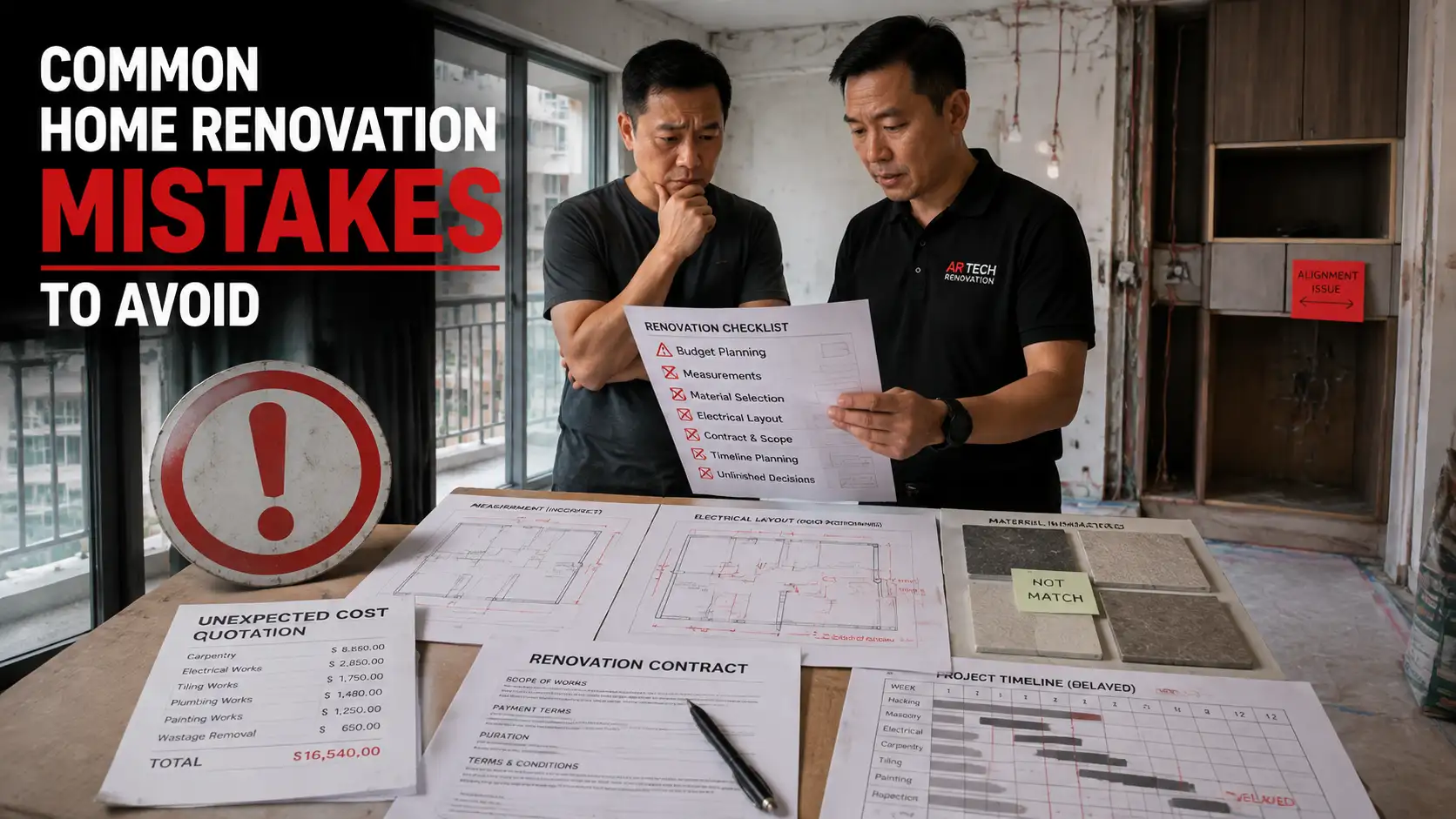
Most homeowners in Singapore don’t realise their renovation mistakes until it’s too late. You finalise the design, sign the contract, and then – surprise costs, wrong measurements, or fixtures that don’t work. By then, fixing things costs far more than getting them right the first time.
These problems happen to first-timers and experienced homeowners alike. The difference is usually planning. A solid plan, the right contractor, and a few key decisions made early can protect your budget and your sanity.
This article walks you through the most common home renovation mistakes – from budgeting errors to material choices to final handover. Read through before you start. These lessons come from real jobs, real problems, and real fixes.
Financial and Planning Mistakes
Skipping proper financial planning is the fastest way to blow your renovation budget. Many homeowners focus on the design and forget the numbers. They get excited, sign a contract, and then hit a wall when unexpected costs appear.
A clear budget protects you. It helps you make smarter choices about materials, fixtures, and scope. It also tells you when to pause and when to push forward.
No Emergency Buffer
Every renovation budget needs a contingency fund. Surprises happen – hidden pipe damage, flooring issues under old tiles, or last-minute material delays. Without a buffer, you either stop work or overspend.
Keep 10% to 20% of your total budget aside. Don’t touch it unless something unexpected comes up. If you finish without using it, great. If you need it, you’ll be glad it’s there.
No Clear Scope
A vague renovation scope leads to confusion, delays, and extra charges. Customers struggle with this when they walk into a contractor meeting without a clear list of what they want done.
Write everything down. Which rooms? What work? What materials? The more specific you are, the more accurate your quote will be. A clear scope also makes it harder for costs to creep up later.
Choosing the Lowest Bid
Picking the cheapest contractor is one of the most expensive mistakes you can make. Low bids often come with cut corners, poor materials, or hidden charges added later.
This problem happens when homeowners compare price without comparing quality. A contractor who bids 30% below everyone else is usually cutting something. Check their past work. Ask for references. Read the contract carefully before you decide.
Skipping Approvals
Starting renovation work without the right approvals can get your project stopped. In Singapore, certain types of work – especially structural changes in HDB flats or condo units – need approval before you begin.
HDB renovation rules and MCST guidelines exist for a reason. Skipping them puts you at risk of fines, forced reinstatement, or disputes with building management. Always check what approvals you need before any hacking or structural work starts.
Design and Functional Mistakes
The most common design mistake is choosing how things look over how they work. A beautiful home that’s hard to live in is a failed renovation. Good design balances both.
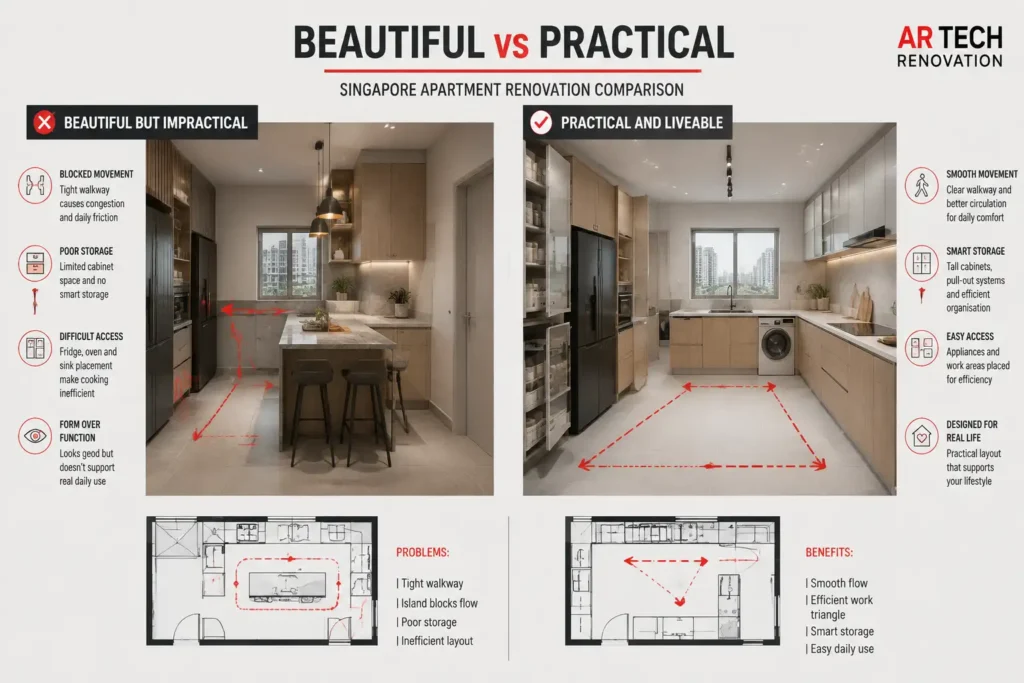
Think about your daily routine. How do you move around your kitchen? Where do you charge devices? Where do you store things you use every day? These questions matter more than the finish on your cabinet doors.
Form Over Function
A design that looks great but doesn’t work for your lifestyle will frustrate you daily. Customers often fall in love with a layout they saw online. But that layout may have been designed for a different home, a different family, and a different lifestyle.
Always test your design against real life. Walk through a typical morning in your head. Does the layout make sense? Does it slow you down or help you?
Poor Power Point Layout
Too few power points – or points in the wrong places – create constant problems. This problem happens when electrical planning is treated as an afterthought. You end up with extension cords across the floor or charging your phone in the hallway.
Plan your power points room by room. Think about where you use each device. The kitchen, bedroom, and living room all have different needs. More outlets cost very little during renovation. Adding them after is expensive.
Inadequate Lighting
Relying only on ceiling downlights leaves most of your home poorly lit. Good lighting uses three layers – ambient, task, and accent. Ceiling lights provide general brightness. Task lights help you work. Accent lights add depth.
Skipping task lighting in the kitchen means cooking in your own shadow. Skipping accent lighting makes a well-designed room look flat. Plan your lighting layout before work starts. It’s much harder to add later.
Ignoring Storage
Not planning enough storage is a mistake most homeowners regret within the first year. You can solve this by thinking through storage during the design phase, not after everything is built.
Every room needs a plan. Pull-out drawers often give better access than standard cabinet doors. Built-in shelves use space that would otherwise be wasted. Think about what you own and where it will go.
Bad Measurements
Wrong measurements create problems that are expensive and slow to fix. Customers struggle with this when they skip detailed measuring and assume everything will fit. Then the custom cabinet arrives and it doesn’t clear the door. Or the fridge won’t fit through the corridor.
Measure every room, every doorway, every hallway. Check dimensions again before ordering custom pieces. If you’re buying large appliances, confirm delivery and installation access before you purchase.
Material Selection Mistakes to Avoid
Choosing the wrong materials causes problems that show up long after the renovation ends. Materials affect durability, maintenance, and how your home looks in five years. Getting this right matters.
Choosing Materials Based on Looks Alone
A material that looks beautiful but wears poorly will disappoint you fast. This problem happens when homeowners pick finishes without asking how they perform in daily use. Light-coloured grout looks great on day one. Two months later, it tells a different story.
Ask your contractor how each material holds up over time. Ask about scratches, stains, cleaning, and long-term appearance. The best material is one that looks good and stays that way.
Using Unsuitable Materials for Wet Areas
Bathroom and kitchen materials must handle moisture, heat, and cleaning chemicals. Using the wrong materials in wet areas leads to warping, mould, and early deterioration.
Porcelain tiles work well in bathrooms. Not all wood finishes do. Check that every material used in a wet area is actually rated for that environment. Your contractor should flag this automatically. If they don’t, ask.
Ignoring Maintenance Requirements
Some materials look stunning but require regular upkeep. Natural stone, for example, often needs sealing. Certain wood finishes need periodic treatment. If you’re not prepared for that work, you’ll end up with a surface that looks neglected.
Ask about maintenance before you commit. Factor in your actual lifestyle. If you have young children or pets, low-maintenance materials may suit you better.
Sacrificing Quality to Reduce Costs
Cutting material quality to save money often costs more in the long run. Cheaper tiles chip faster. Budget waterproofing fails sooner. Low-cost fittings need replacing within a few years.
You can solve this by knowing where quality matters most. Splurge on waterproofing, flooring, and fixtures you use daily. Save on decorative items that are easy to replace later.
Easy Mistakes That Can Lead to Bigger Problems
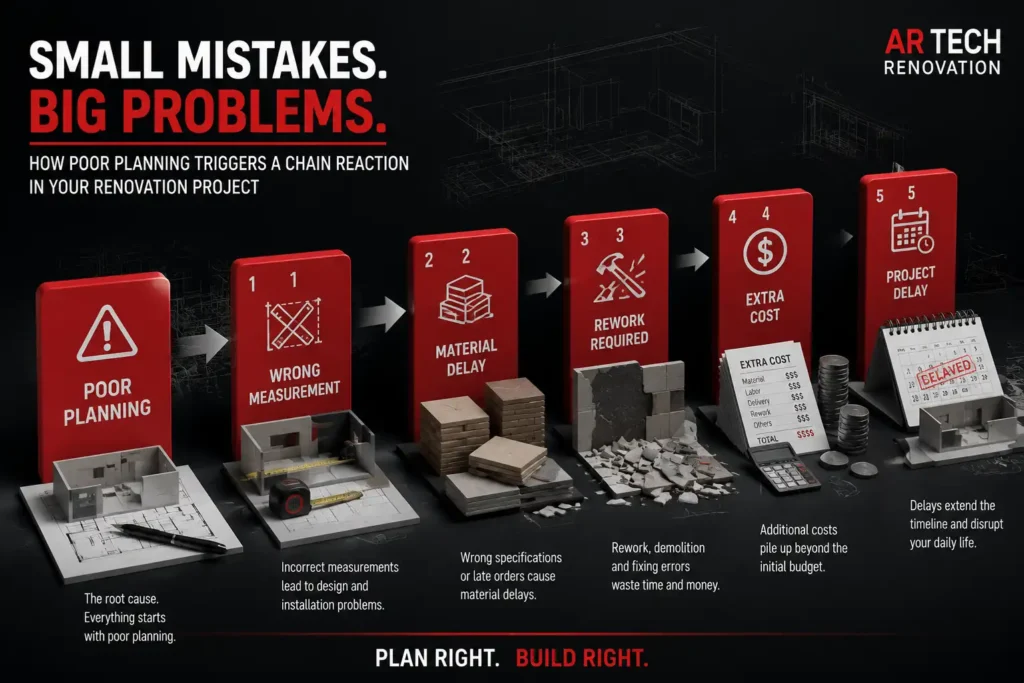
Some renovation mistakes seem small but snowball into serious issues. These are the ones that catch homeowners off guard because they don’t look like problems at first.
Not Doing Your Homework
Starting renovation without researching your contractor, your materials, or your requirements is risky. Customers struggle with this when they move too fast. They hire the first contractor they speak to. They skip reading reviews. They assume everything will work out.
Compare at least two to three quotations before hiring. Check the contractor’s past projects. Look at their communication style early – it tells you a lot about how the job will go.
Delaying Decisions or Making Last-Minute Changes
Late decisions and mid-project changes are among the most common causes of delays and cost increases. This problem happens when homeowners finalise materials or layouts after construction has already started.
Lock down your materials and design before work begins. Once walls are up and tiles are laid, changing your mind costs real money. The contractor has to undo work, reorder materials, and reschedule labour.
Not Reading the Contract
Signing a contract without reading it carefully puts you at serious risk. The contract defines payment terms, timelines, scope of work, and what happens if something goes wrong.
Read every line. Ask about anything you don’t understand. Check what is and isn’t included. A good contractor will welcome your questions. One who doesn’t is a warning sign.
Failing to Prepare Your Home
Not preparing your home before renovation starts creates unnecessary delays and damage. This means clearing furniture, protecting flooring in areas not being renovated, and making access easy for the team.
The more prepared your home is, the faster and smoother the work goes. A disorganised site slows everything down and increases the chance of accidental damage.
How to Choose a Team That Helps You Avoid These Pitfalls
The right renovation contractor helps you avoid most of these mistakes before they happen. Experience makes a real difference. A contractor who has handled hundreds of projects knows what can go wrong and how to prevent it.
Look for clear communication from the start. Does the contractor listen to your brief? Do they ask good questions? Do they flag potential issues early? These signs tell you how they’ll handle problems during the job.
Check their past projects. Ask for photos or references from similar work – HDB renovations, condo units, or landed homes, depending on your property type. A contractor who only shows polished marketing photos without real project examples is harder to evaluate.
Make sure the contract is detailed. Every item of work should be listed. Materials, brands, quantities, and timelines should be clear. Vague contracts lead to disputes. A contractor who gives you a detailed scope is a contractor who plans ahead.
How to Stay on Track from Start to Finish
Staying on track requires more than just hiring a good contractor. You need to stay involved. Regular communication and clear milestones help you catch small problems before they become big ones.
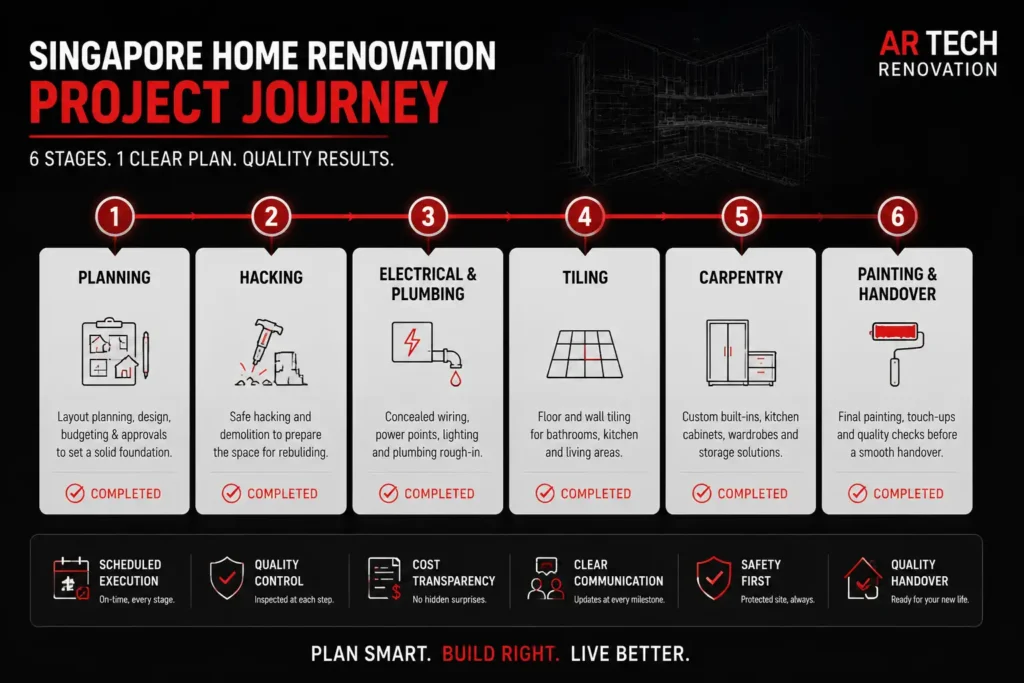
Setting Checkpoints and Milestones
Break your renovation into clear stages with agreed completion dates. Typical checkpoints include hacking completion, electrical and plumbing rough-in, tiling, carpentry installation, painting, and final fit-out. Each stage should be reviewed before the next starts.
This approach keeps the project moving. It also gives you a clear record of progress and any delays. If a stage runs late, you know early and can adjust.
Regular Progress Reviews
Visit the site regularly and review progress against the agreed plan. You don’t need to be there every day. But weekly check-ins help you spot issues early. Photos are useful – ask for updates between visits if you can’t be on-site.
Raise concerns quickly. Small issues left unaddressed grow. A tile installed incorrectly is much easier to fix on day one than after the entire floor is done.
Mistakes to Avoid Before Final Handover
The last stage of renovation is just as important as the first. Many homeowners rush the handover because they’re excited to move in. That’s when mistakes get missed and problems get locked in.
Skipping the Defect Inspection
Do a thorough defect inspection before you accept the completed work. Walk through every room. Check every surface. Look at grout lines, paint edges, cabinet doors, and switch alignments. Write down everything that needs attention.
A good contractor expects this inspection and welcomes it. Defects found now are fixed at no extra cost. Defects found three months later are harder to resolve.
Failing to Test Fixtures and Installations
Test every tap, switch, socket, and appliance before signing off. Turn on all lights. Run the water. Check every socket with a phone charger. Test the air conditioning. Open and close every door and drawer.
This step takes less than an hour. It can save you weeks of follow-up later. Don’t skip it because you’re tired or in a hurry.
Not Collecting Warranty Documents
Get all warranty documents, receipts, and manuals before your contractor leaves. This includes warranties for fixtures, electrical work, waterproofing, and any branded products installed. Store them somewhere accessible.
Warranties matter if something fails within the coverage period. Without documentation, making a claim is much harder. Your contractor should provide these as part of the handover.
Frequently Asked Questions
What are the most common home renovation mistakes?
The most common mistakes are budget underestimation, poor planning, and choosing contractors based on price alone. Other frequent issues include bad measurements, skipping permits, poor electrical planning, and rushing the handover. Most of these mistakes happen before construction even starts. Good preparation prevents most of them.
How can I avoid going over my renovation budget?
Set a detailed budget before you begin, and keep a contingency fund of 10% to 20% for unexpected costs. Lock down your scope, materials, and design before work starts. Mid-project changes are one of the biggest budget killers. Compare multiple quotes and make sure your contract covers everything clearly.
Why is choosing the cheapest contractor a mistake?
The cheapest contractor usually cuts costs somewhere – in materials, workmanship, or supervision. You may save money upfront but spend more fixing problems later. Evaluate contractors on their past work, communication, and contract detail. Price should be one factor, not the only one.
How can I avoid costly renovation delays?
Finalise all decisions – materials, layouts, fixtures – before construction begins. Late changes and material delays are the most common causes of project overruns. Set clear milestones with your contractor and review progress regularly. Good planning at the start saves significant time later.
What planning mistakes should homeowners avoid before renovating?
Homeowners often skip detailed measurements, skip permits, or start work without a clear scope. In Singapore, HDB and condo renovations often require approvals before certain work can begin. Always check your property’s requirements first. A clear brief and accurate measurements prevent most planning problems.
How do I avoid hidden renovation costs?
Ask your contractor to itemise every cost in the quotation. Check what is and isn’t included. Ask specifically about hacking, disposal, touch-up painting, and post-renovation cleaning. Read the contract carefully before signing. Hidden costs usually appear in areas the quotation left vague.
Which renovation decisions are hardest to change after completion?
Structural changes, electrical layouts, and waterproofing are the hardest and most expensive to redo. These elements go behind walls or under floors. Changing them later means undoing finished work. Get these right the first time. Decisions about paint colour or furniture can be updated far more easily.
How much contingency budget should I keep for a home renovation?
Keep 10% to 20% of your total renovation budget as a contingency reserve. The exact amount depends on the age of your property and the complexity of work. Older homes tend to have more surprises – worn pipes, outdated wiring, or floor levelling issues. A larger buffer gives you more protection.
Conclusion
Avoiding renovation mistakes comes down to three things: plan well, choose the right team, and stay involved throughout. Most costly problems start early – with a vague scope, a rushed decision, or a contract that wasn’t read carefully. Getting the basics right at the start protects your budget and your timeline.
Material choices, measurements, permits, and lighting all deserve attention before work begins. These decisions are hard to undo once construction is underway. The homeowners who end up happy are usually the ones who spent more time planning and less time reacting to surprises.
Singapore Home Renovation Services has helped homeowners across Singapore plan and complete renovations that stand the test of time. Our team knows what can go wrong at every stage – and how to prevent it. Whether you’re renovating an HDB flat, a condo, or a landed home, we bring the experience and detail-focus that makes a real difference.
We’d love to help you get your renovation right from the start. Reach out to us today for a consultation. We’ll walk through your plans, flag potential issues early, and give you a clear, detailed quote – so you can move forward with confidence.